Bedding Guide
Choosing an All-Natural Mattress Pad: Materials, Fit, and Care
A mattress pad can add a modest layer of comfort while helping shield a mattress from everyday wear. When choosing a natural-fiber option, look beyond the label: the material, construction, fit, and care instructions all shape how it will feel and how practical it is to live with.
Published November 5, 2026
A bed is a small landscape of layers. Beneath the sheet, a mattress pad forms a quiet boundary between the sleeper and the mattress itself. It may soften a firm surface, add a little loft, or help catch perspiration and minor spills before they reach the mattress. Yet “natural” does not describe one uniform material or performance. Cotton, wool, and silk behave differently, and even two pads made from the same fiber can feel distinct depending on their fill, cover, quilting, and fit.
Choosing well begins with a practical question: what do you want the pad to do? A thin cotton layer may be enough for basic protection and a slightly cushioned feel. A loftier wool-filled pad may bring more insulation and a springy softness. Silk offers a light, smooth layer, though its care requirements can be less convenient. None is automatically best for every sleeper or bedroom.
It also helps to distinguish a mattress pad from a topper. The terms are sometimes used loosely, but a pad is generally a thinner layer intended to add light cushioning or protection. A topper is usually thicker and more focused on changing the feel of the mattress. Products vary, so examine actual dimensions and construction rather than relying on the name alone.
What “all-natural” can—and cannot—tell you
“All-natural” is a broad description, not a complete specification. It may refer to the principal fiber, such as cotton or wool, but not necessarily every component. A pad can have a natural fill and a synthetic backing, elastic, thread, or treatment. If material composition matters to you, read the full description and look for details about the cover, fill, binding, and any finishes.
Natural fibers can offer useful characteristics, including softness, moisture absorption, and breathability. But the phrase does not guarantee a particular level of comfort, durability, environmental impact, or safety. Those depend on how the fiber was produced and processed, the product’s design, and how it is maintained. A natural-fiber pad can still be a poor match if it is too warm, difficult to wash, or incompatible with the mattress.
Certifications can help clarify certain claims, but each one addresses specific criteria. For example, a certification may apply to the fiber’s organic status or the processing of textile components. Check which parts of the product are covered and whether the claim applies to the complete pad or only a particular material. A label is most useful when you understand what it verifies.
For shoppers comparing organic options, a product description may identify standards such as GOTS. The organic cotton mattress pad, for instance, is described as made from 100% organic cotton and certified to GOTS and Made Safe standards. Its construction includes quilted squares and deep pockets; those practical details matter alongside the fiber claims.
Cotton: familiar, breathable, and easy to understand
Cotton is a widely used bedding fiber because it feels soft against the skin and can absorb moisture. In a mattress pad, cotton may appear in the cover, the fill, or both. A pad made entirely from cotton has a different profile from one with a cotton shell around a down-alternative or wool fill, so check the materials list rather than assuming the outer fabric tells the whole story.
Quilting affects how cotton pads feel and wear. Stitching can hold the filling in place and create a lightly cushioned surface, while the fabric weave influences texture and airflow. A percale cover, for example, may feel crisp and matte; sateen tends to feel smoother. These descriptions concern the fabric’s construction and hand, not necessarily the pad’s thickness or level of protection.
Cotton can be a sensible choice when routine washing is a priority, but the care label is decisive. Some pads are machine washable; others may need gentler treatment or professional cleaning. Washing in water that is too hot, using an unsuitable detergent, or drying at high heat can contribute to shrinkage, weakened elastic, or damage to quilting. Follow the instructions for the specific item, even when the fiber itself seems familiar.
For a crib or another smaller sleep surface, check the dimensions carefully and make sure the pad is designed for that mattress. A product described as an organic cotton crib pad, such as this organic crib mattress pad, has specified dimensions and care instructions. Fit and secure bedding are especially important on a crib mattress; follow current safe-sleep guidance and the mattress and bedding manufacturers’ directions.
Wool: loft and moisture management
Wool is valued in bedding for its resilience and ability to absorb moisture vapor. In a mattress pad, it can form a soft, lofty layer that feels different from a flat cotton cover. Its insulating character may suit a cool room or a sleeper who likes a warmer, cushioned surface, though individual comfort varies. Fiber, fill amount, quilting, and room conditions all influence the result.
Wool is not a substitute for active temperature control, and no material can guarantee that a person will sleep cool or warm. The overall sleep environment matters: room temperature, humidity, pajamas, sheets, mattress construction, and personal comfort all play a part. A wool pad may help manage moisture within the bedding, but it will not solve every cause of night sweating or overheating.
Wool-filled layers also call for realistic care expectations. Some can be aired and spot-cleaned, while others have particular cleaning restrictions. Frequent machine washing may compress or distort wool, depending on the construction. Before choosing a wool pad, consider whether its maintenance suits your household and whether you have space to air it when needed.
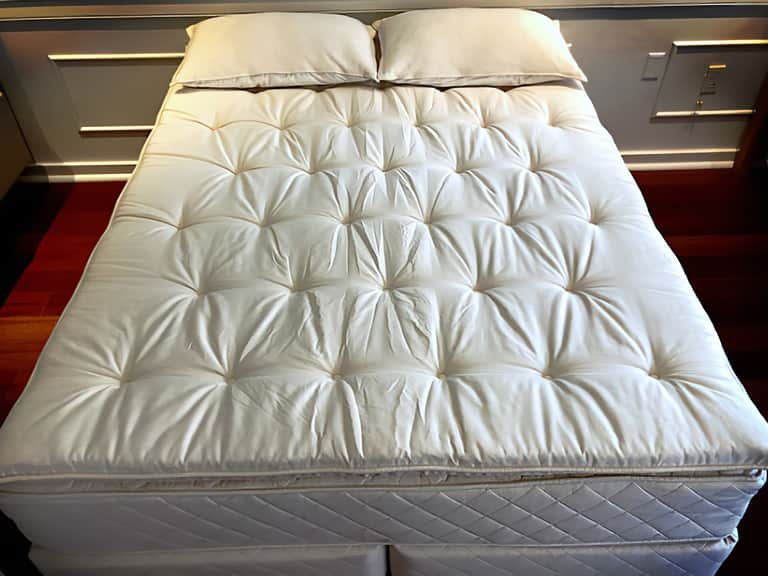
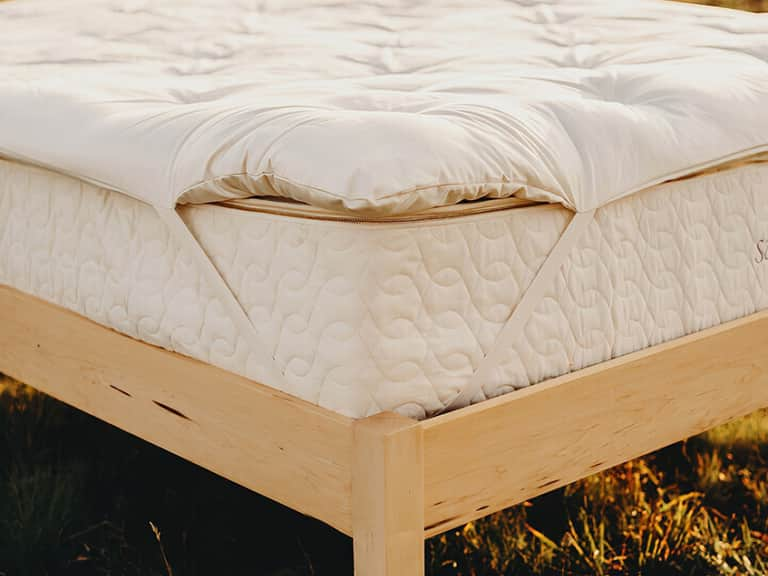
A wool topper is thicker and more comfort-focused than many pads. The Savvy Rest Natural Savvy Woolsy Mattress Topper is described as having generous wool fill in a certified organic cotton sateen casing, corner straps, and an approximately three-inch height. Its product description recommends adding an organic mattress pad over it to help protect the topper and mattress. That recommendation illustrates an important layering distinction: a topper may change the feel, while a thinner pad above it can serve as a more easily maintained protective layer. Review the maker’s care guidance before combining bedding layers.
Silk: light cushioning, particular upkeep
Silk is a fine, lightweight fiber that can be used as fill in a mattress pad. Depending on its construction, it may add a smooth, low-profile cushion rather than the substantial loft of a thick topper. Some sleepers appreciate that lighter feel, especially when they do not want to alter the mattress’s overall firmness very much.
Silk pads may require more specialized care than cotton versions. A silk-filled pad might be labeled for dry cleaning rather than machine washing. That does not make it unsuitable, but it changes the cost and effort of routine upkeep. A buyer who wants to wash bedding at home should check this point before choosing, not after a spill.
The cover also matters. A cotton casing around silk fill can combine a familiar surface feel with a different internal fiber, while elastic bands or corner anchors may help keep the pad in place. Ask what can be cleaned, how it should be dried, and whether the complete pad—not only its cover—is intended to be washable.
Pad, protector, or topper?
These layers serve overlapping but distinct purposes. A pad typically provides light cushioning and may help reduce everyday wear. A protector is designed chiefly to create a barrier against spills, stains, dust, or other contaminants; its effectiveness depends on its construction. A topper usually adds more substantial cushioning or changes the feel of the mattress.
Some products combine functions, but do not assume that a natural-fiber pad is waterproof or fully protective. Cotton and wool can absorb moisture, which may be useful in some contexts, but absorption is not the same as a liquid barrier. If protection from spills is essential, inspect the product’s explicit performance claims and materials. A waterproof membrane may involve components that are not natural fibers.
Layering also affects how the bed feels. A thick topper plus a deep, quilted pad can make the mattress surface feel noticeably softer and can raise the height of the sleeping surface. This may affect fitted-sheet compatibility, bed height, and how securely the bedding stays in place. Consider the entire stack—mattress, topper, pad, and sheet—not each layer in isolation.
Measure for a secure fit
Correct sizing is one of the simplest ways to avoid frustration. Measure the mattress’s length and width, then note its depth, including any topper that will remain beneath the pad. Compare those measurements with the pad’s stated size and pocket depth. A label such as “queen” is a useful starting point, but mattress dimensions and thickness can differ across beds.
Pocket depth describes how much of the mattress side the fitted portion can accommodate. A pocket that is too shallow may pull loose or strain at the corners. Excessively deep pockets can leave fabric slack, although elastic design and mattress shape also influence fit. If the product uses corner straps rather than a fitted skirt, confirm that the anchors can reach and hold securely around your mattress.
Check whether your mattress has a pillow top, built-in quilting, or an adjustable base. These features can affect how a pad sits and whether it shifts during movement. On an adjustable bed, a loose or bulky layer may bunch when the base changes position. A secure fit is not merely neater: it helps the pad remain evenly distributed instead of gathering into ridges.
- Measure the mattress’s length, width, and depth.
- Include any topper that will sit beneath the pad.
- Compare the measurements with the listed pocket depth and fit style.
- Check the manufacturer’s guidance for adjustable bases or specialty mattresses.
- Confirm that the pad can be used with the fitted sheet you already own.
Construction details worth comparing
Two pads with the same headline material can perform differently because of construction. Fill weight—the amount of fiber used—can influence loft and warmth, though it is not a stand-alone measure of quality. Quilting pattern and spacing affect how the fill is held in place. Dense stitching may create a flatter feel, while larger quilted sections can allow more loft between seams.
Look at the cover fabric, too. A tightly woven cover may help contain fine fibers; a softer weave may feel more relaxed against the sheet. Seam finishing, elastic strength, and corner construction contribute to durability and day-to-day ease. Product descriptions do not always provide every specification, so when a detail matters, seek clarification rather than inferring it from a marketing phrase.
Natural fibers can settle or change in feel with use. That is not necessarily a defect, but it means care and construction influence longevity. Follow recommendations for rotation, airing, and cleaning. Avoid pulling on the fill or stretching the pad aggressively when making the bed, and use a correctly sized sheet to reduce unnecessary tension.
Care: protect the fiber and the mattress
Care instructions are part of the purchase decision. A pad that feels ideal but requires cleaning you cannot maintain may not be practical for everyday use. Check whether it can be machine washed, whether the cover is removable, and what temperature and drying method are allowed. “Washable” does not always mean suitable for frequent washing or high-heat drying.
Use a gentle cycle when directed, avoid overloading the washer, and follow the specified detergent guidance. If a pad is meant for dry cleaning or spot cleaning, do not assume that soaking it will be harmless. Heat can shrink natural fibers and stress elastic; agitation can distort quilting or encourage fill to clump. Dry the pad completely before returning it to the bed, since trapped dampness can create an unpleasant sleep environment.
Regular airing can help bedding feel fresh between washes, but it should be done according to the maker’s guidance and away from conditions that could damage the material. A separate protector may reduce how often the pad itself needs cleaning. For spills, act promptly using the recommended method, and avoid applying cleaners that may leave residues or discolor fabric.
Keep the mattress manufacturer’s warranty terms in view as well. Some warranties specify that the mattress must be used with an appropriate foundation or protected from stains. A pad does not automatically satisfy every warranty requirement, so review the actual terms and retain purchase and care information for your bedding.
A practical comparison checklist
Before choosing among natural mattress pad materials, compare the qualities that affect daily use rather than relying on one broad claim. Think about your current mattress, bedroom climate, preferred surface feel, and tolerance for maintenance.
- Purpose: Decide whether you need light cushioning, a protective layer, or a more substantial change in comfort.
- Materials: Identify the fill, cover, backing, thread, and elastic—not just the most prominent fiber.
- Feel: Consider whether you prefer a flat, crisp surface or a loftier, softer layer.
- Temperature and moisture: Treat fiber characteristics as helpful tendencies, not guarantees of a particular sleep temperature.
- Fit: Match mattress dimensions and depth, including any topper, to the product’s specifications.
- Care: Make sure the washing or cleaning routine is realistic for your household.
- Claims: Check what certifications cover and whether performance claims are clearly defined.
- Layer compatibility: Confirm that the pad works with your mattress, topper, fitted sheet, and bed frame.
Questions shoppers often ask
Will a natural mattress pad make a firm mattress feel soft?
It may add some cushioning, but the result depends on thickness, fill, quilting, and the mattress beneath it. A thin pad usually makes a subtler difference than a substantial topper. If the mattress itself is causing discomfort, a pad may not provide enough change to address the underlying issue.
Is organic cotton automatically the best choice?
No single material is right for everyone. Organic status concerns how particular materials were produced and certified; it does not determine the pad’s loft, fit, washability, or comfort. Compare those features alongside certification details.
Can a cotton or wool pad protect against liquid spills?
Natural fibers can absorb moisture, but that does not make them waterproof. If liquid protection is important, look for an explicit description of the barrier and its materials. A separate protector may be appropriate, provided it is compatible with the mattress and bedding layers.
How often should a mattress pad be washed?
Follow the maker’s instructions. Washing frequency depends on the pad’s materials, whether a protector or sheet covers it, and household use. Washing too often or using unsuitable heat may damage fibers and construction, so care should be based on the product label rather than a universal schedule.
Choose for the bed you actually have
The best natural mattress pad is not simply the one with the most appealing material name. It is the one whose construction suits the mattress, whose dimensions keep it secure, whose feel complements the sleep surface, and whose care instructions fit ordinary life. Cotton may offer a familiar, washable option; wool can bring resilient loft and moisture management; silk may suit someone seeking a lighter layer who accepts more particular upkeep.
Read the details slowly: what each component is made of, how thick the pad is, how it attaches, what it can protect against, and how it must be cleaned. In bedding, the most useful choices are often made not by chasing a promise of perfect sleep, but by matching materials and maintenance to the realities of the room and the people who use it.