Organic Mattresses · Consumer Guide
What “All-Natural” Really Means in an Organic Sleep Surface
A mattress is less a single object than a small landscape of materials: fibers, foams, springs, covers, and barriers layered together. The words “all-natural” may sound like a clear map of that landscape, but they are not, by themselves, a complete description. To understand what is in a sleep surface—and how it was made—look past the headline to the components, the processing, and the scope of any certification.
At first glance, naturalness seems simple: a material comes from the living world, so it must be natural. But the path from field, tree, or rubber plant to finished mattress can involve harvesting, processing, blending, chemical treatments, and assembly. Cotton may be grown organically or conventionally. Latex can be made from natural rubber, synthetic rubber, or a blend. Wool may serve as a comfort layer, a flame barrier, or both. A product may combine these materials with steel springs, adhesives, or components whose origins are not immediately obvious.
That complexity does not make labels meaningless. It makes detail essential. For shoppers considering organic mattresses or a sleep surface made with natural materials, a useful question is not simply, “Is it natural?” but “Which parts are natural, how are they processed, and what evidence supports the claim?”
This guide explains how to read those claims, distinguish material descriptions from certifications, and weigh practical considerations such as durability and care. It is an educational framework—not a guarantee that any particular mattress will suit every sleeper or meet every personal standard.
“Natural” is a broad description, not a full ingredient list
In everyday language, “natural” usually suggests a material derived from plants, animals, or minerals rather than made entirely through industrial synthesis. In mattress marketing, however, the term can appear in descriptions of a single component, a large portion of a product, or a finished sleep surface. The wording alone may not reveal which meaning is intended.
For example, “natural latex” points to rubber derived from latex-bearing plants, but it does not automatically tell you whether the entire mattress is made of that material. A latex mattress may also contain cotton, wool, a fabric cover, or other elements. Some products combine natural and synthetic latex. A “cotton cover” may refer only to the outer fabric, not the filling or the mattress as a whole.
It also helps to separate origin from processing. A fiber can begin as a plant or animal material and then be cleaned, spun, woven, treated, or combined with other substances. The word “natural” does not, on its own, explain those steps. Nor does it establish that a product is organic, chemical-free, hypoallergenic, or environmentally harmless.
Those terms describe different qualities and require different kinds of evidence. “Organic” generally concerns how agricultural materials are produced and handled under a defined standard. “Certified” means an outside program has evaluated a specified product, material, or process against its own criteria. “Hypoallergenic” is a claim about potential allergic response, not a synonym for organic or natural. Reading them as interchangeable can leave important questions unanswered.
Start with the whole construction
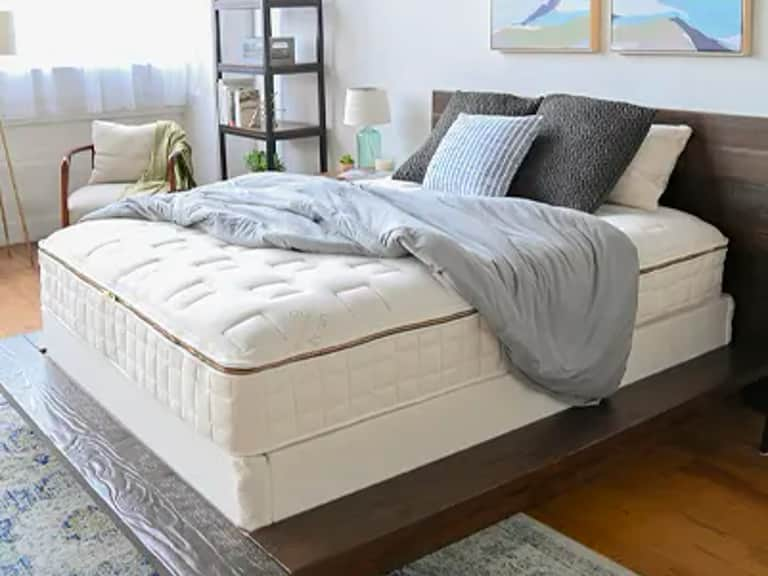
A mattress can be understood as a stack of components, each with a different job. The top cover forms the surface against sheets. Comfort layers cushion the body. Support layers help carry weight and influence how deeply the sleeper settles. A perimeter or base may stabilize the construction. Some designs also include a flame barrier, which is intended to help the product meet applicable flammability requirements.
When evaluating an “all-natural” claim, look for a component-by-component account. A helpful materials disclosure names the major layers and identifies what each one is made from. It should make clear whether a listed material describes the entire component, a blend, or just its covering. If the description says “organic cotton,” for example, ask whether that refers to the cover fabric, the batting, or both.
- Cover: Identify the fiber, such as cotton, and whether it is organic, conventional, or a blend.
- Comfort layers: Check for latex, wool, cotton, foam, or other cushioning materials, including whether they are blended.
- Support core: Find out whether the mattress uses latex, springs, foam, or a combination.
- Flame barrier: Ask what material is used and how the manufacturer describes its role.
- Assembly: Look for information about adhesives, stitching, quilting, and any other components relevant to your priorities.
Not every maker publishes the same level of detail. If a description is vague, a direct question to the manufacturer may clarify whether an ingredient is present or whether a claim applies only to one layer. Keep the answer in context: a sales page, technical specification, certificate, and care label may each describe different aspects of the product.
Natural latex: useful details behind a familiar phrase
Latex is one of the materials most closely associated with natural mattresses. Natural latex originates in rubber-tree sap, which is processed into a resilient foam. Dunlop and Talalay refer to different manufacturing methods. Their names describe production approaches, not a universal rating of quality, purity, or comfort. The feel of a finished layer also depends on its formulation, density, thickness, and the way it is used in the mattress.
Descriptions can vary: “natural latex” may refer to latex made largely from natural rubber, while other formulations can include synthetic rubber or blends. A material disclosure should state what the manufacturer means rather than expecting a shopper to infer it. If organic status matters, check whether the latex itself is covered by a relevant certification. A certified cotton cover does not establish that the latex core is certified, and a certified latex component does not prove that every other mattress component has the same status.
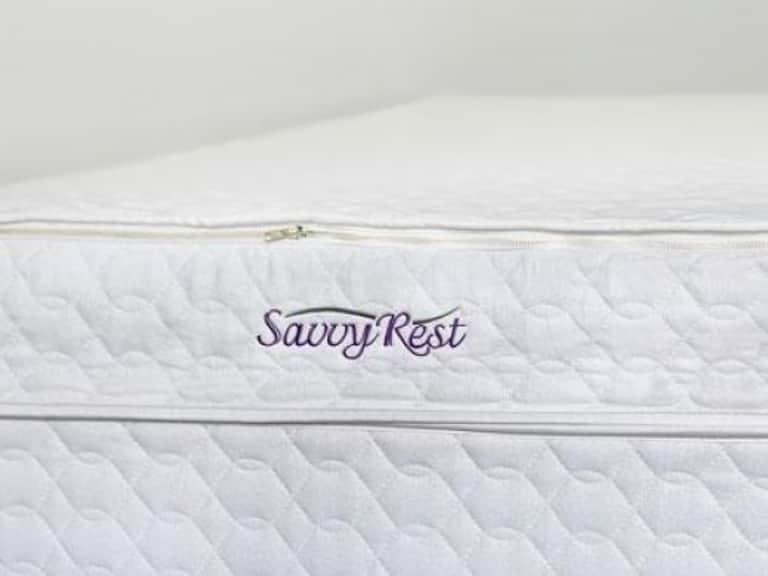
For a concrete example of how construction details can be presented, the Savvy Rest Tranquility Latex Mattress is described as having two latex layers, an organic cotton outer casing, and an organic wool flame barrier. Its listing also distinguishes Dunlop latex sourced in India from an available Talalay option sourced in the United States. That kind of layer-by-layer description gives readers specific claims to verify and compare; it should not be treated as a blanket statement about all latex mattresses.
People with a latex allergy or sensitivity should consider the issue separately from natural or organic labeling. Material origin alone cannot determine an individual’s reaction, and a mattress listing is not a substitute for medical guidance. If allergy concerns are significant, discuss them with a qualified healthcare professional and seek precise information from the manufacturer about the product’s materials and construction.
Organic certification: look for the scope, not just the seal
Third-party certifications can help make complex claims easier to evaluate. They may set requirements for how a material is grown, processed, or handled, or assess particular product attributes. But certifications are not interchangeable, and a logo is only useful when the reader knows what it covers.
Check the certification’s name, the organization that issued it, and the product or material included in its scope. Does the certification apply to the finished mattress, the latex, the cotton, or a particular production stage? Is the exact model named in a searchable directory or supported by a current certificate? These checks matter because brands may offer several versions of a product, and a certification for one version should not automatically be assumed to apply to another.
For example, the Naturepedic EOS Classic Mattress is described as using organic Dunlop latex, organic cotton, organic wool, and pocketed springs. Its product information also describes a wool-free vegan version. That illustrates why shoppers should examine the exact configuration they are considering: a change in materials can alter which claims apply. Confirm current specifications and certification scope directly with the manufacturer or the relevant certifying organization.
Certification is a tool for evaluating defined criteria; it is not a universal endorsement of comfort, durability, health outcomes, or environmental impact. A certified product still needs to fit the sleeper, bed frame, household needs, and budget. Conversely, the absence of a particular certification does not, by itself, prove that a material is poor quality. It means the shopper should rely on other transparent evidence when assessing the claim.
Be alert to wording that sounds precise but leaves the key question open. A product may say “made with organic materials” without specifying their share of the whole mattress. A phrase such as “certified organic” should lead to a follow-up: certified by whom, and for which parts? Trustworthy descriptions make it possible to answer those questions without guesswork.
No single label answers every concern
Different shoppers use “natural” as shorthand for different priorities. One person may be looking for organic agricultural inputs. Another may want to avoid a specific material, reduce exposure to certain substances, choose animal-free components, or understand where raw materials come from. These are distinct goals, so it helps to name the concern before comparing products.
Likewise, terms such as “non-toxic,” “chemical-free,” and “eco-friendly” can be difficult to interpret without a clear definition and supporting evidence. All physical materials are made of chemicals in the scientific sense; the practical question is which substances are present, how they are used, and what standard or test supports a safety-related claim. A broad phrase cannot replace a full material disclosure or an applicable certification.
Flammability requirements are another part of the picture. Mattresses must meet relevant safety rules, and manufacturers use different design approaches to do so. Some may use wool or other materials in a barrier; others may rely on different constructions. Ask what the barrier contains and consult the product documentation rather than assuming that “natural” means there is no flame barrier or that a particular material guarantees a specific safety outcome.
Comfort and support are separate from material origin
A sleep surface can be made with carefully documented materials and still feel wrong for a particular person. Comfort is shaped by firmness, layer thickness, body weight, sleeping position, temperature preferences, and the base beneath the mattress. “Natural” does not mean soft, firm, cool, supportive, or suitable for back pain. Those are separate properties to evaluate.
When comparing options, consider how the mattress is built and whether the company provides a reasonable way to assess its feel. A customizable design may let a buyer select different layers or firmnesses, while a fixed construction offers fewer configuration choices. Trial periods, layer exchanges, warranty conditions, and return fees can make a practical difference—read the terms before purchase rather than relying on a headline promise.
Also check the intended foundation or bed frame. Some mattresses require a particular slat spacing or support surface. An unsuitable base can affect performance and may affect warranty eligibility. Ask for the manufacturer’s foundation requirements and compare them with the furniture already in your home.
Durability, cleaning, and everyday care
Material choices influence maintenance, but no material makes a mattress maintenance-free. Covers may be removable but not washable; some should only be spot-cleaned. Wool can respond differently to moisture and heat than cotton. Latex layers may be protected by a zippered casing that is not designed to be laundered. A care label is therefore as important as the material list.
Before buying, look for clear instructions on spills, routine cleaning, ventilation, rotation, and the use of a protector. A washable mattress pad can help shield a sleep surface from everyday moisture and stains, but it should fit securely and suit the mattress’s construction. A protector’s fabric and waterproof layer may also affect temperature and feel, so consider those details as part of the complete bedding system.
Durability is influenced by more than the name of a fiber. Layer density, construction quality, how the mattress is supported, how it is used, and the care it receives all matter. A warranty describes the manufacturer’s stated coverage under specified conditions; it is not a promise that a mattress will feel unchanged for the entire warranty period. Read what counts as a defect, what exclusions apply, and whether the buyer must use a particular foundation.
Ask practical questions: Can the cover be cleaned? Are individual layers replaceable? Does the maker recommend rotating the mattress? What happens if a component compresses or a seam fails? A product with transparent care instructions and accessible service information may be easier to live with than one whose marketing focuses only on its raw materials.
A careful shopper’s checklist
Use the following questions to turn a broad claim into a comparison you can actually make:
- What does “all-natural” refer to? Is it the whole mattress, the latex core, the cover, or one ingredient?
- Are all major components identified? Look for the cover, comfort layers, support core, flame barrier, and any disclosed adhesives or blends.
- Are blends explained? If latex, fabric, or filling combines materials, ask for the composition rather than relying on a single-word label.
- Which claims are certified? Record the certifier and confirm whether the certificate covers the exact material or model.
- Does the chosen configuration match the documentation? Custom options, vegan versions, and different covers may use different materials.
- What is the feel and support profile? Check firmness options, layer arrangement, and whether the design suits your position and preferences.
- How should it be cared for? Read washing, spot-cleaning, rotation, and protector recommendations before purchase.
- What do the trial and warranty actually say? Review return costs, exchange rules, exclusions, and foundation requirements.
- Can the manufacturer answer specific questions? Clear, consistent responses are more useful than broad reassurance.
A label is a starting point, not a verdict
The phrase “all-natural” can point toward meaningful choices, but it does not tell the entire story of a mattress. To understand a sleep surface, follow its materials through the layers: where they come from, how they are processed, how they are assembled, and what outside standards—if any—apply. Then consider the less dramatic questions that shape daily use: whether the mattress feels comfortable, how it is supported, and what its care instructions require.
Transparency is the most useful companion to a label. A detailed materials list lets shoppers compare like with like. A clearly scoped certification helps explain what has been independently assessed. Honest care and warranty information turns a promising description into a more complete picture of ownership.
In the end, choosing an organic or natural sleep surface is not a contest in which one appealing word settles every question. It is a process of matching documented materials and verified claims to personal priorities. Read closely, ask specifically, and treat every label as an invitation to learn what lies beneath the cover.
Frequently asked questions
Does “all-natural” mean a mattress is organic?
No. “Natural” and “organic” are not interchangeable. Natural describes material origin in broad terms, while organic claims concern defined agricultural and handling practices. Check which materials are certified and whether the certification applies to the exact product or only a component.
Is natural latex always 100% natural?
Not necessarily. Product descriptions may use “natural latex” for materials with different formulations, and some latex products may contain synthetic rubber or blends. Look for a specific composition disclosure and verify any certification relevant to the latex itself.
Does a certification prove that a mattress is comfortable or long-lasting?
No. A certification applies to defined criteria within its scope. It does not guarantee an individual’s comfort, the lifespan of a mattress, or suitability for a particular sleeper. Evaluate feel, construction, care, and warranty terms separately.
What should I do if a materials description is incomplete?
Ask the manufacturer to identify the major components, clarify any blends, and explain which certifications apply to the exact model and configuration. If the answer remains unclear, compare it with products that provide more specific disclosures.